


Images

Listen
Dance, Contemporary

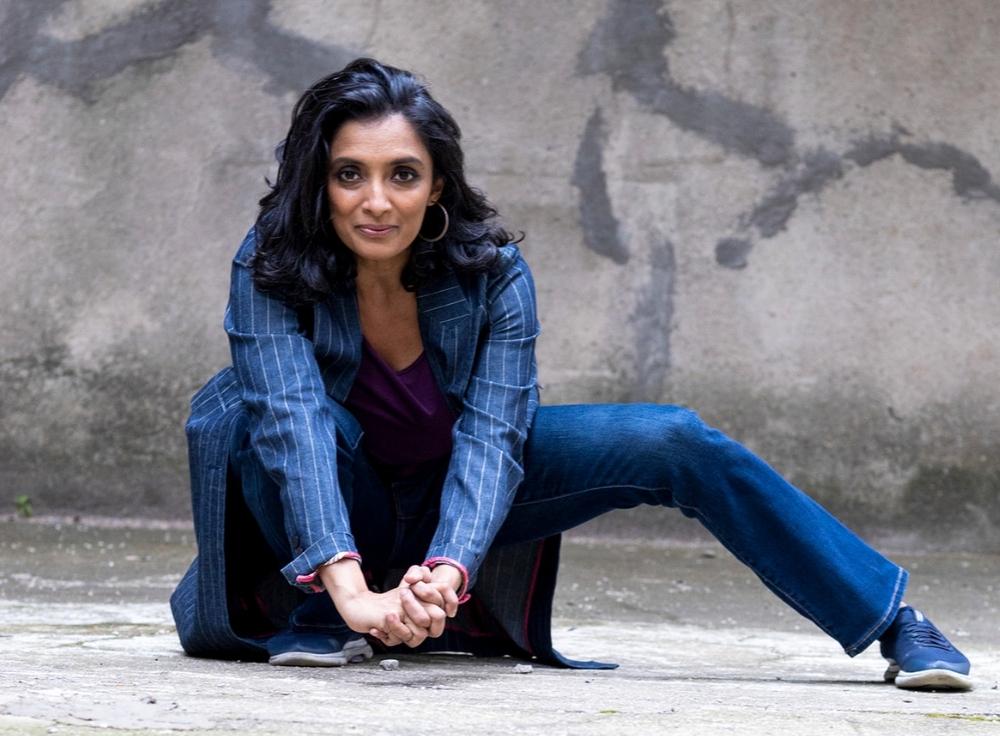
Listen is a highly collaborative, multidisciplinary project bringing together sign language, the classical Indian hand dance Bharatanatyam, contemporary theatre, and traditional symphony orchestra, inspired by Shannon Stocker’s children’s book Listen: How Evelyn Glennie, a Deaf Girl, Changed Percussion. This interpretive retelling of Evelyn’s remarkable life story is choreographed by Thresh Dance Company’s Artistic Director and Choreographer, Preeti Vasudevan, featuring a new composition by award-winning composer Vasco Mendonça. Cadenza had the pleasure of speaking to Evelyn and Preeti about the project and so much more!
Q&A with evelyn and preeti
EG: My life has never been lived in a single language, a single culture, or a single art form, so it could never be faithfully told through just one discipline. What drew me to them is their shared curiosity of interpretation. Preeti doesn’t just choreograph Bharatanatyam; she uses its ancient, precise physical vocabulary to speak to the modern world. Vasco is a master at constructing architectural landscapes of sound that capture complex psychological depths. By weaving their distinct heritages together with sign language and contemporary theatre, Listen opens up more doors of communication. My story is deeply personal, but this multidisciplinary project transforms it into something far bigger. It proves that when we truly pause to listen across different worlds, we don’t just bridge cultural divides – we discover a completely new, shared human language.
PV: I have always been a huge fan of Evelyn Glennie, and what moved me most about the book was her perseverance and refusal to give up. What drew me to creating a dance-theatre work was her description of rhythm and sound as a “sensation” that lived deep inside her. As a choreographer and dancer, that resonated with me immediately. Dancers also work from an internal pulse, expressing outwardly what is felt within. Reading about how Evelyn developed this profound relationship to sound and learned to communicate it to the world felt incredibly powerful to me. It opened up a beautiful connection between movement, music, sensation and expression that I felt compelled to explore through this new work.
PV: While the project is still in development, Listen will use six dancer-actors, both deaf and hearing, to explore the rhythmic and sonic world that shaped young Evelyn’s “magical listening.” Combining American Sign Language, classical South Asian dance hand gestures, highly energized rhythmic dance, and live percussion, the work will create a universal theatrical language that is layered, immersive, and multi-sensory. At its heart, the piece asks: How do we learn to read each other? And how can stories help us listen deeply to one another with true empathy?
A central focus of the work is rhythm-driven movement and footwork that blends South Indian classical dance techniques with a live percussion score created by Vasco, inspired by Evelyn’s electrifying presence as a performer—a kind of “fire dancer” onstage. The performers will incorporate ASL alongside Indian dance vocabulary, using expressive hand and facial gestures woven into the choreography as a new language of expression. The piece will trace Evelyn’s life across four stages, from childhood and the loss of her hearing to her evolution into one of the world’s most celebrated artists. Using the book as an inspiration, the production aims to create an abstract, emotionally resonant world of music, movement, and visual storytelling. The creative team is also researching the use of haptic technology so that audience members who are Deaf or hard of hearing can experience the vibrations and physical energy of the performance.
EG: To live with a disability is not a limitation of capability — it’s a specialization in navigation. When people look at disability, they often see a closed door. What they fail to see is that when standard doors are closed, you develop entirely new ways of moving through the world. You learn to listen with your body, see with your intuition, and problem-solve with a creativity the mainstream world rarely has to access.
My message to young people is not to waste energy trying to fit into a world built for the mainstream. The world does not need you to conform to definitions of how things “should” be done. It desperately needs your unique perspective to show what else is possible. You are not here to be tolerated or accommodated. You are here to teach the world how to truly listen.
PV: I believe orchestras should program Listen because live music has the power not only to entertain, but to awaken emotional and physical awareness in audiences. By combining symphonic music with movement, I want the work to invite both deaf and hearing audiences to experience sound as sensation, emotion, and human connection rather than passive listening alone. Through dance and live orchestra, Listen encourages audiences to reflect on how emotions live within the body and how we connect through shared sensory experience. I see the project as an opportunity for orchestras to expand the meaning of “listening” and create more immersive, inclusive, and emotionally activating performances. I hope audiences leave Listen feeling reawakened to the power of live human connection in an increasingly artificial world. Through the shared energy between performers and audience, the work invites people to experience music, movement, and storytelling as deeply human acts rooted in vulnerability and presence. At its heart, the piece is also about resilience — inspired by Evelyn Glennie’s journey overcoming obstacles to become a groundbreaking artist. I hope audiences will feel empowered to embrace their own individuality, discover their inner voice, and listen more deeply to themselves and to one another.
EG: My imagination has never been fueled by what I have achieved, but by what I have yet to perceive. Curiosity is the pulse of life. One of my greatest ambitions is to rethink how sound and space are designed. I want to collaborate with architects, urban planners, and scientists to create resonant public spaces where deaf, hearing, neurodivergent, and neurotypical individuals can experience sound equally through vibration, touch, and the earth beneath their feet. I am not interested in leaving behind a monument to my past. I want to help create a world that is more open, curious, and deeply attuned to the vibrations of life.